What Power BI’s May 2026 feature summary signals for self-service analytics governance
What Power BI’s May 2026 feature summary signals for self-service analytics governance


May 2026 is the month Power BI governance stopped being optional.
May 2026 is not just another Power BI feature drop. It reads like a governance signal: Microsoft is steadily pushing self-service analytics away from permissive experimentation and toward policy-driven, AI-assisted control surfaces that BI owners can no longer treat as optional.
The mistake I still see leaders make is reading monthly feature summaries as product-news entertainment. That is the wrong operating model. If you own Power BI, Fabric, or the surrounding Power Platform estate, every monthly release note is a governance decision point: standardize now, pilot carefully, or block pending controls.
My opinion is simple: the real story in the May 2026 Power BI orbit is not any single feature. It is the shift in operating model. Capabilities tied to governance policy, embed security, agent controls, and automated administration all point in the same direction. The release pattern suggests enterprise self-service analytics will scale less by enabling more creators and more by standardizing guardrails, tenant controls, and cross-platform oversight.
Why this matters more than the feature list
Conventional wisdom says feature summaries are mostly for makers and report authors. Scan the visuals, note the UX improvements, maybe forward the link to your Center of Excellence. That view is outdated.
Microsoft’s release planning now makes governance and administration an explicit feature area for Power Platform from April through September 2026, not a side note. That does not prove a single unified governance model across every product. But it is a strong signal that centralized oversight is becoming first-class product surface area, not just internal process documentation.
Power BI still carries the self-service promise: connect to data, visualize it, share it, move fast. That promise is exactly why governance maturity matters as adoption scales. The easier the platform becomes to use, the more dangerous it is to run on tribal norms.
A field example made this obvious for me: a finance and operations organization had dozens of Power BI workspaces, multiple Power Platform environments, and an external-facing Power Pages implementation with embedded reports before anyone could answer a basic question: which tenant settings were intentionally enabled versus inherited from old experimentation?
That is the real issue. One team’s self-service convenience becomes another team’s compliance problem.
The stronger signal: policy is becoming the preferred control surface
What changed in May 2026 is not simply that there are more admin features. It is that policy appears more often as the mechanism for control.
You can see that pattern across Microsoft release items:
- The Agentic Center of Enablement is scheduled for preview in May 2026 and GA in June 2026, with Microsoft positioning it around risk detection, issue prioritization, and remediation planning.
- Enhanced admin controls for agent security are also scheduled in the same window, with emphasis on policy enforcement and governance controls for Copilot and agent development.
- A governance policy capability appears in the Dynamics 365 Customer Service release plan for May 2026.
- Power Pages is adding support for Power BI embed token v2 in May 2026, which should be treated as a security and architecture review event, not just an embedding enhancement.
None of that means Microsoft has declared one universal governance model for all self-service analytics. But the release pattern suggests something important: governance is becoming more cross-platform, more operational, and more policy-led.
If your BI operating model still assumes governance happens in a quarterly review board after teams have already shipped semantic models, reports, and embedded surfaces, you are behind.
The hardest governance problems in Power BI were never solved by guidance documents alone:
- Which semantic models are approved for reuse?
- Which workspaces can host production content?
- Which embedded scenarios are allowed for external users?
- Which AI-assisted authoring paths are allowed to touch governed data?
- Which automated remediation actions can run without human approval?
Those require enforceable standards, not wiki pages.
What should move from experimentation into standard practice
This is where I get opinionated: several habits should stop being “best effort” and become routine.
1. Create a monthly release triage process
BI platform owners, security, and Power Platform admins need one recurring motion to classify new capabilities into three buckets:
- Standardize
- Pilot
- Watch or restrict
A lightweight workflow is enough, but it must exist.

What matters here is not sophistication. It is repeatability. Governance that scales is boring, reviewable, and easy to run every month.
2. Score features against a governance rubric, not excitement
Feature adoption should not be driven by demos. It should be driven by business value, blast radius, control maturity, and lineage readiness.
Here is a small Python example as an illustrative governance pattern, not a product-native Power BI scoring tool.
# Score new Power BI or Power Platform features against a governance rubric.
from dataclasses import dataclass, asdict

@dataclass
class Feature:
    name: str
    business_value: int
    blast_radius: int
    control_maturity: int
    lineage_readiness: int

def governance_score(f: Feature) -> dict:
    score = (f.business_value * 0.35) - (f.blast_radius * 0.30) + (f.control_maturity * 0.20) + (f.lineage_readiness * 0.15)
    tier = "High Review" if score < 1.5 or f.blast_radius >= 4 else "Pilot" if score < 3.0 else "Fast Track"
    return {"name": f.name, "score": round(score, 2), "tier": tier, **asdict(f)}

feature = Feature("Copilot-assisted semantic model changes", 5, 4, 2, 3)
print(governance_score(feature))
What to observe: a feature with high business value can still land in “High Review” if blast radius is large or controls are immature. That is the right bias for enterprise analytics.
3. Formalize embed security patterns now

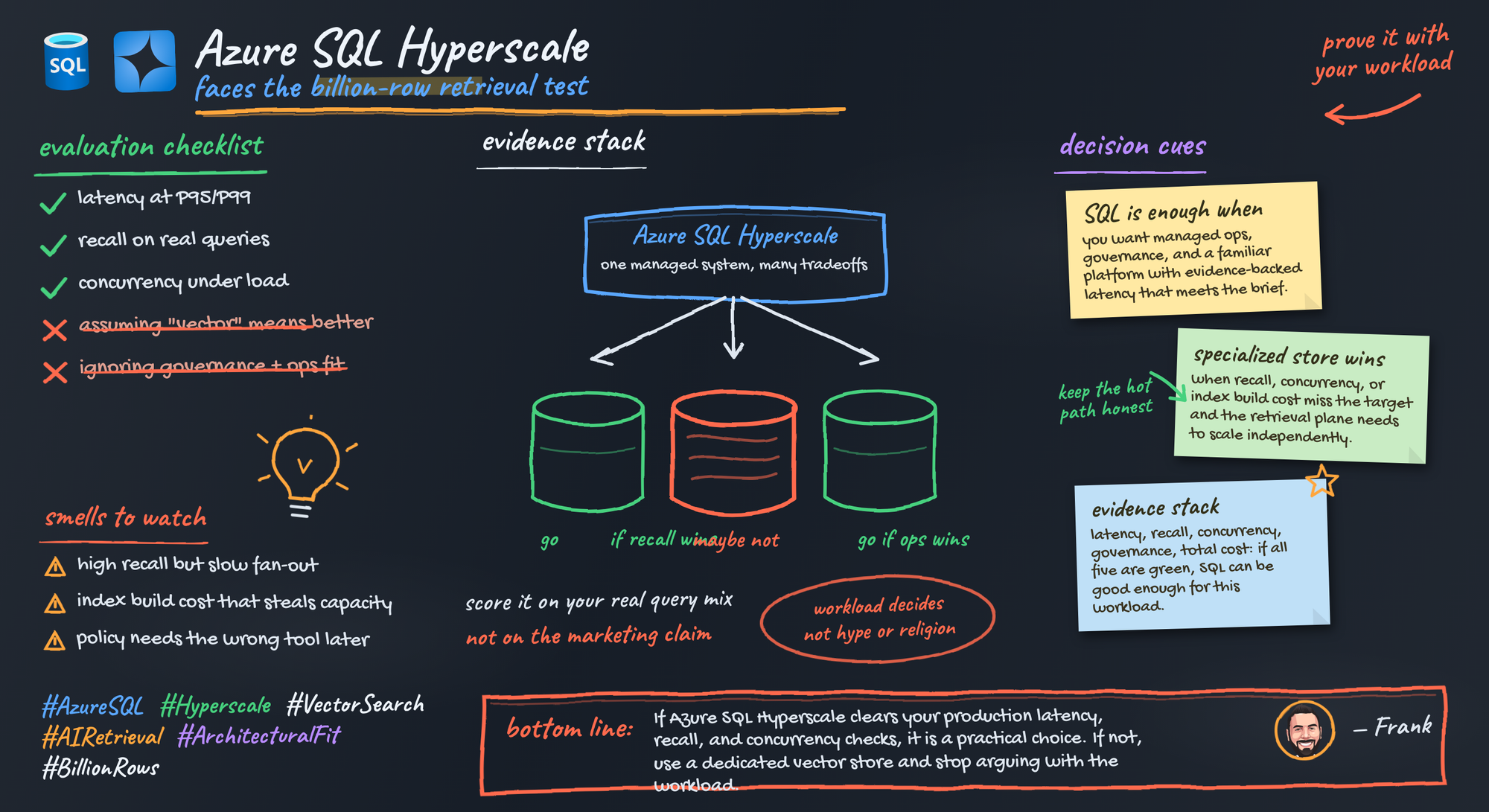
Support for Power BI embed token v2 in Power Pages is a governance signal masquerading as a delivery enhancement. Embedded analytics changes should trigger a reference architecture review before broad rollout.
Why? Because embedded scenarios collapse boundaries between report design, application identity, external access, and data exposure. If your organization still treats embedding as something an app team can “just wire up,” you are creating an unmanaged external analytics surface.
This is also where the cross-platform lens matters. The risk is not “inside Power BI” only. It sits across Power BI, Power Pages, identity, and whatever data access pattern sits behind the report.
What should stay in pilot until controls are clearer
Not everything in this wave should be standardized. Some things should remain in pilot until you can prove auditability, exception handling, and ownership.
The biggest example is AI-assisted administration.
The Agentic Center of Enablement sounds promising because Microsoft frames it around risk detection, issue prioritization, and remediation planning. But governance teams should separate useful assistance from over-automation.
Recommendations are usually ready before autonomous enforcement is ready.
That distinction matters. Once a system can propose or automate remediation, you need clear answers to questions many organizations still cannot answer cleanly:
- Who approves remediation actions?
- What evidence is retained for audit?
- How are false positives handled?
- What happens when a remediation action breaks a legitimate business workflow?
- Can the action be rolled back?
The same caution applies to enhanced admin controls for agent security. More controls are good. But teams should validate how those controls map to real operating procedures before broad rollout. A control that exists in an admin center but is not tied to ownership, logs, and exception handling is not governance maturity. It is interface decoration.
Three governance themes that matter now, and the operational step for each
1. Policy-first administration is replacing informal guidance
Operational step: baseline tenant settings monthly.
The strongest signal in this release pattern is that policy is becoming the preferred control surface. That matters because self-service analytics breaks when tenant settings drift while new features keep arriving.
The PowerShell example below is illustrative. It is a conceptual baseline object, not a direct export from a specific admin cmdlet. In practice, tenant baselining would usually draw from admin APIs, audit logs, or exported configuration snapshots.
# Inventory key Power BI tenant settings into a monthly governance baseline object.
$tenantSettings = @(
    [pscustomobject]@{ Setting = "ExportData"; State = "Enabled"; Scope = "EntireOrg" }
    [pscustomobject]@{ Setting = "PublishToWeb"; State = "Disabled"; Scope = "EntireOrg" }
    [pscustomobject]@{ Setting = "CreateWorkspaces"; State = "Enabled"; Scope = "SecurityGroup:BI-Creators" }
)

$baseline = foreach ($s in $tenantSettings) {
    [pscustomobject]@{
        ReviewMonth = (Get-Date -Format "yyyy-MM")
        Setting     = $s.Setting
        State       = $s.State
        Scope       = $s.Scope
        GovernanceNote = if ($s.State -eq "Enabled") { "Validate against new feature rollout" } else { "Monitor for exceptions" }
    }
}

$baseline | Format-Table -AutoSize
If your team cannot show what changed in tenant posture month to month, you are not governing feature adoption. You are reacting to it.
2. AI-assisted governance changes the risk profile
Operational step: require audit trails, approval boundaries, and rollback before scale.

When Microsoft schedules agentic governance capabilities and enhanced agent security controls in the same release window, the stronger signal is not “turn everything on.” It is that AI-assisted administration is becoming normal enough to require operating rules.
Before scaling agentic workflows, governance leads should demand three things:
- Clear audit trails
- Explicit approval boundaries
- Reversible actions
If you cannot explain who authorized an automated remediation path and how to undo it, you are not ready to scale it.
3. Cross-platform oversight is now mandatory
Operational step: review environments, workspaces, and embedded surfaces together.
Separate admin teams with separate policies create blind spots exactly where the new features are converging. Power BI embed scenarios in Power Pages and governance capabilities in Power Platform are not isolated product stories. They are shared control problems.
A simple environment readiness baseline can expose where those controls are weak. Again, this is an illustrative governance pattern, not a direct export from one specific admin interface.
# Build a Power Platform environment baseline for feature adoption review.
$environments = @(
    [pscustomobject]@{ Name = "Default"; Region = "US"; Managed = $false; DlpPolicy = "Standard" }
    [pscustomobject]@{ Name = "Finance-Prod"; Region = "EU"; Managed = $true; DlpPolicy = "Restricted" }
)

$report = foreach ($env in $environments) {
    [pscustomobject]@{
        Environment = $env.Name
        Region      = $env.Region
        Managed     = $env.Managed
        DlpPolicy   = $env.DlpPolicy
        AdoptionReadiness = if ($env.Managed -and $env.DlpPolicy -eq "Restricted") { "Ready" } else { "Needs controls" }
    }
}

$report | Format-Table -AutoSize
The goal is not to inventory everything. It is to identify which environments are actually ready for broader feature adoption and which still need stronger controls.
A practical monthly review loop
Instead of treating strategy and execution as separate conversations, combine them into one monthly operating rhythm.
Step 1: Build a feature review queue
Take the monthly release notes and score each relevant item. This example ranks features and emits a governance review queue. It is illustrative, but the workflow is real.
# Rank a monthly list of announced features and emit a governance review queue.
features = [
    {"name": "Workspace-level Git integration", "business_value": 4, "blast_radius": 3, "control_maturity": 4, "lineage_readiness": 5},
    {"name": "Natural language data prep", "business_value": 5, "blast_radius": 4, "control_maturity": 2, "lineage_readiness": 2},
    {"name": "Environment routing policy", "business_value": 3, "blast_radius": 2, "control_maturity": 5, "lineage_readiness": 4},
]

def score(item):
    return round(item["business_value"]*0.35 - item["blast_radius"]*0.30 + item["control_maturity"]*0.20 + item["lineage_readiness"]*0.15, 2)

queue = []
for item in features:
    s = score(item)
    action = "Admin review" if item["blast_radius"] >= 4 or item["control_maturity"] <= 2 else "Pilot"
    queue.append({"name": item["name"], "score": s, "action": action})

for row in sorted(queue, key=lambda x: x["score"], reverse=True):
    print(f'{row["name"]}: score={row["score"]}, action={row["action"]}')
The scoring model does not need to be perfect. The value is consistency.
Step 2: Export decisions into an evidence baseline
Once features are classified, store the decision, owner, and evidence. If you cannot produce a monthly baseline of feature decisions, you do not have a governance process. You have opinions.
# Export a governance-ready CSV baseline for feature decisions and evidence tracking.
import csv

rows = [
    {"feature": "Workspace-level Git integration", "owner": "BI Platform", "decision": "Pilot", "evidence": "Lineage validated"},
    {"feature": "Natural language data prep", "owner": "Data Governance", "decision": "Admin review", "evidence": "Controls incomplete"},
]

with open("feature_governance_baseline.csv", "w", newline="", encoding="utf-8") as f:
    writer = csv.DictWriter(f, fieldnames=["feature", "owner", "decision", "evidence"])
    writer.writeheader()
    writer.writerows(rows)

print("Wrote feature_governance_baseline.csv")
Step 3: Review workspace ownership and sensitivity before rollout
New features do not land in a vacuum. They land in workspaces with varying owners, capacities, and sensitivity levels. This PowerShell example is also illustrative rather than a direct product export.
# Prepare a workspace review baseline with ownership and sensitivity signals.
$workspaces = @(
    [pscustomobject]@{ Name = "Finance Analytics"; Capacity = "Premium"; Owner = "finops@contoso.com"; Sensitivity = "Confidential" }
    [pscustomobject]@{ Name = "Sales Sandbox"; Capacity = "Shared"; Owner = "salesbi@contoso.com"; Sensitivity = "General" }
)

$review = foreach ($w in $workspaces) {
    [pscustomobject]@{
        Workspace   = $w.Name
        Owner       = $w.Owner
        Capacity    = $w.Capacity
        Sensitivity = $w.Sensitivity
        ReviewFlag  = if ($w.Capacity -eq "Shared" -and $w.Sensitivity -eq "Confidential") { "Escalate" } else { "Standard" }
    }
}

$review | Export-Csv -Path ".\workspace-governance-baseline.csv" -NoTypeInformation
Write-Host "Saved workspace-governance-baseline.csv"
Sensitive content in loosely controlled workspace patterns should trigger escalation before feature expansion, not after an incident.
Step 4: Run the review as an operating rhythm


That sequence matters because governance should be operationalized, not improvised during escalations.
The bottom line: the winners will be the teams that operationalize restraint
The May 2026 feature summary is not important because it contains one blockbuster Power BI trick. It matters because the release pattern suggests a new default: self-service analytics is increasingly wrapped in policy, administration, embedded security, and AI-era oversight.
That is a good thing.
The organizations that win from here will not be the ones that enable every new capability first. They will be the ones that adopt quickly without confusing speed with looseness.
So here is my stance:
- Standardize the controls that are mature.
- Pilot the features that expand risk surfaces.
- Make monthly release review a formal governance habit.
- Stop pretending Power BI governance can be managed inside Power BI alone.
If your team still runs self-service analytics as a permissive creator program with occasional admin cleanup, May 2026 is your warning shot.
What is one feature from the last three release notes your team formally reviewed, piloted, or blocked?
#PowerBI #Datagovernance #PowerPlatform
Sources & References
- Enable governance policy
- New and planned features for Power Pages, 2026 release wave 1
- Support Power BI embed token v2 for Power Pages
- Automate governance with Agentic Center of Enablement
- New and planned features for Microsoft Power Platform governance and administration, 2026 release wave 1
- Manage agent security with enhanced admin controls
- Power BI service description - Service Descriptions
Try it yourself
Run this tutorial as a Jupyter notebook: Download runbook.ipynb (34 cells, 23 KB).