Enterprise AI Case Study Lessons for Decision Velocity
The best enterprise AI case studies aren’t about chat — they’re about decision velocity under uncertainty

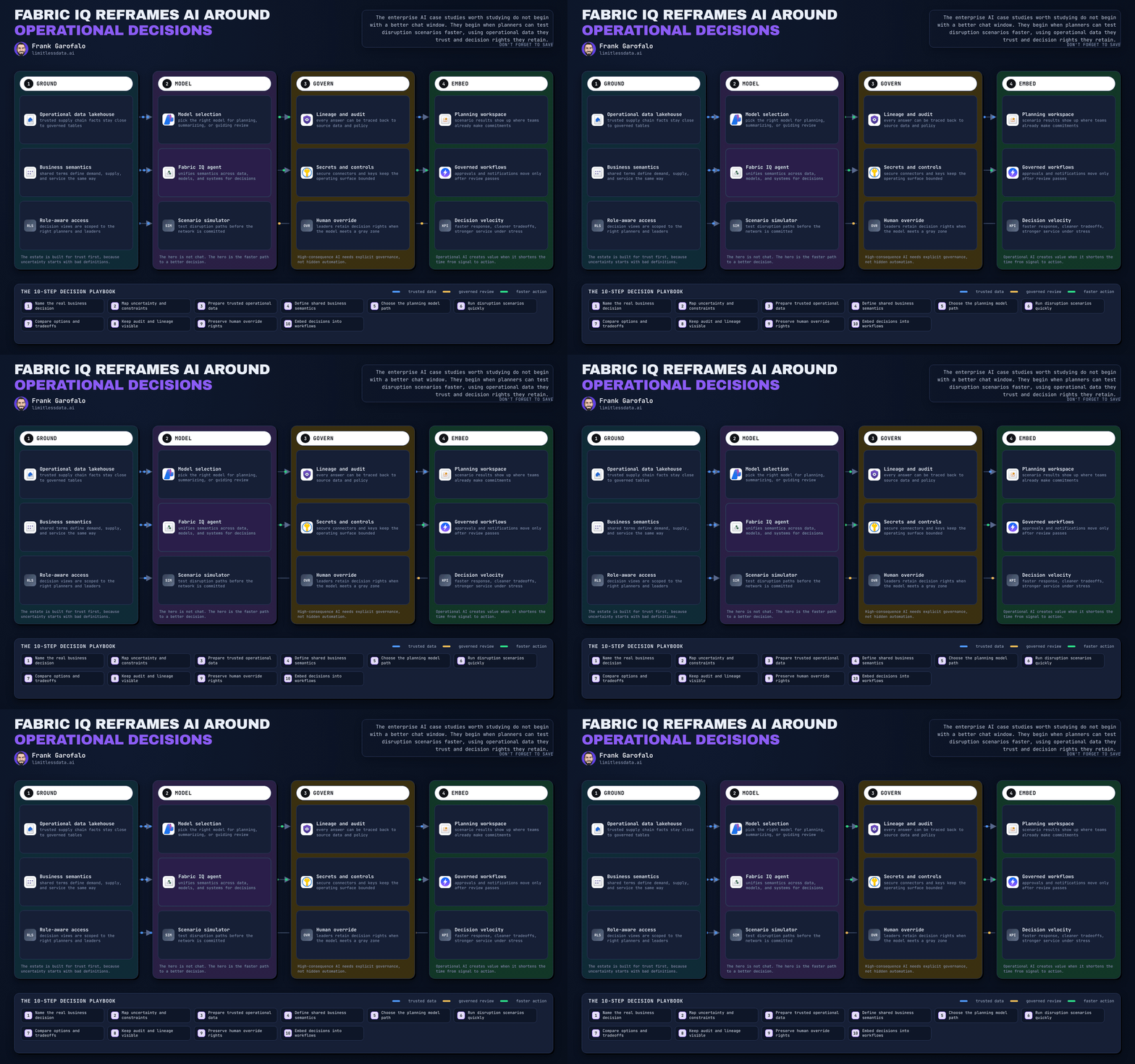
The best enterprise AI case studies are not about chat.
On this page
They are about decision velocity under uncertainty.
A useful pattern looks like this: disruption arrives, data conflicts appear, an evidence pack is assembled, a policy gate routes the decision, a human approves when needed, and the outcome is measured.
That is the story worth studying.
Context
It is 6:12 a.m.
A planner gets a supplier alert, a port delay, and a demand spike in the same hour. The business has minutes to decide whether to reroute, allocate, expedite, or accept a service miss.
In that moment, nobody needs a better chatbot.
They need a decision-ready workflow.
Problem
This is where many AI programs break.
Not because the model cannot generate an answer, but because the operating context is inconsistent:
- inventory means different things across systems
- lead-time freshness is unclear
- service targets vary by region
- override rules live in email, not policy
When that happens, the AI does not create the confusion. It exposes it.
So the real issue is not “how do we make the assistant smarter?”
It is “how do we make the decision process trustworthy enough to move faster?”
Intervention
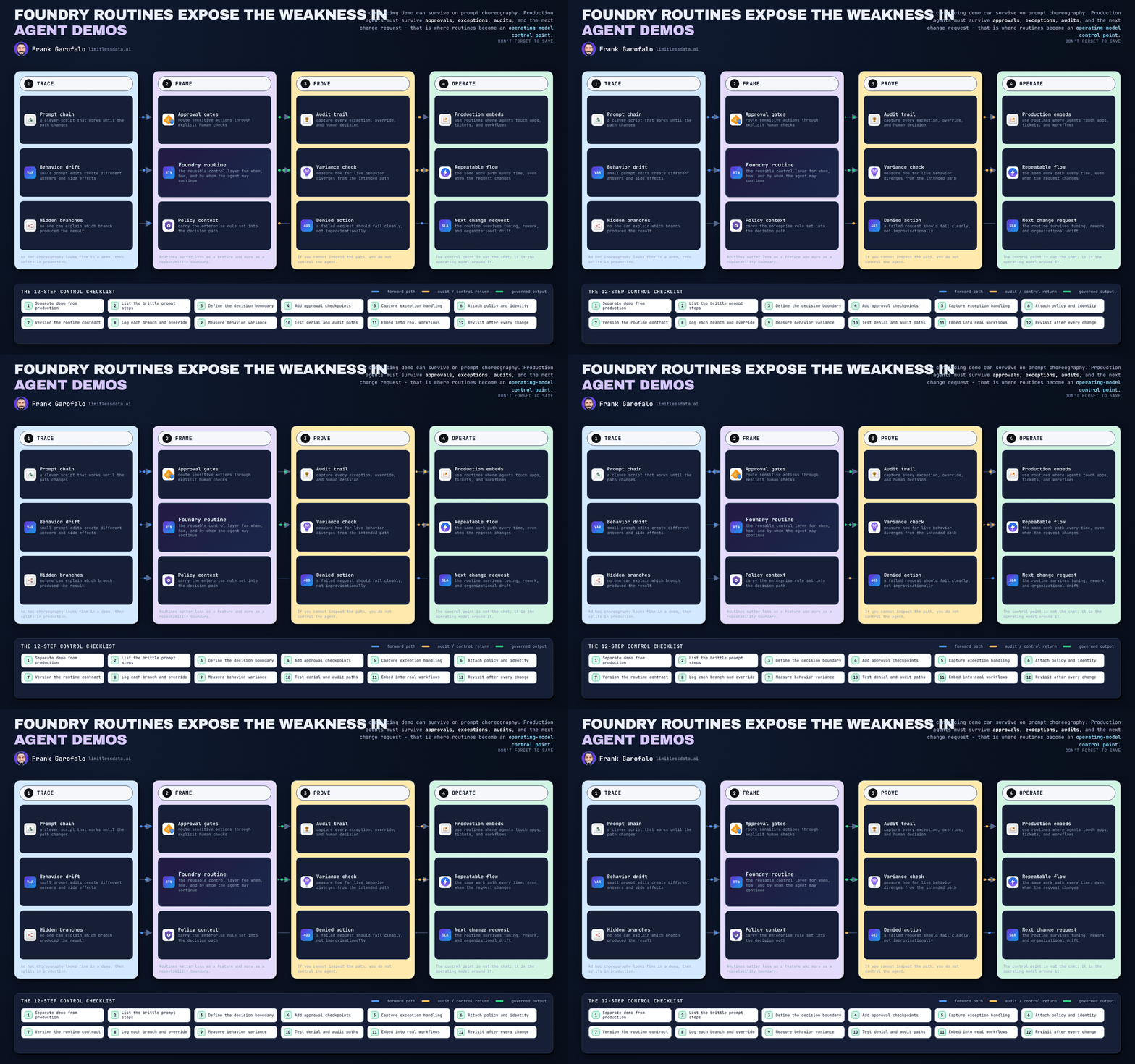
The most practical design pattern I see is simple:
- ingest the disruption signals
- normalize them against operational data
- score uncertainty and impact
- assemble an evidence pack
- apply policy thresholds
- route low-risk cases automatically and high-risk cases to a human
- log the outcome and tune the workflow
That is a much stronger enterprise pattern than chat-first design.
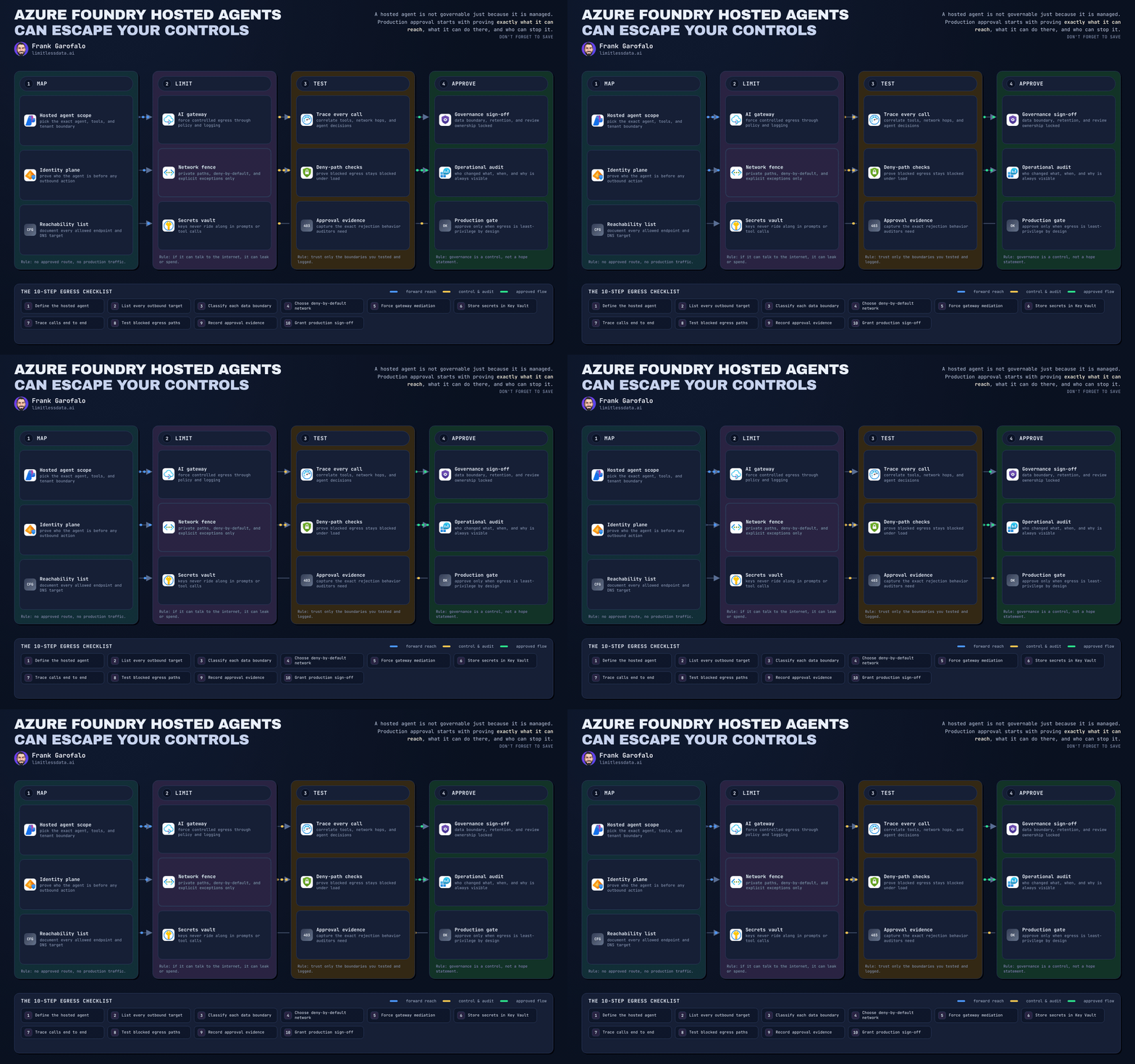
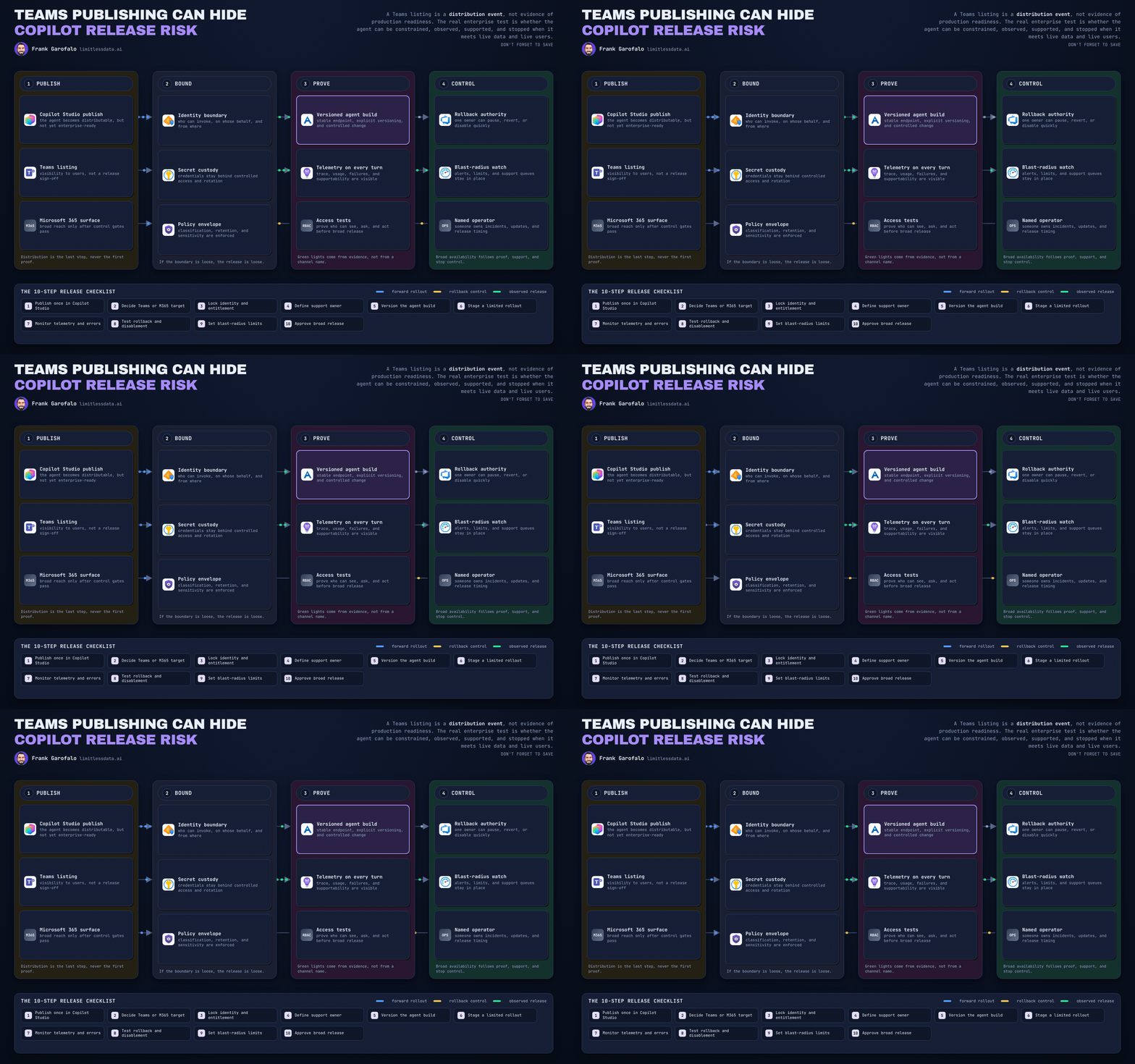
Microsoft’s platform guidance is useful here as building blocks, not proof of value. Microsoft Fabric is positioned as a unified analytics platform, Azure Foundry provides tooling for models and agents, and Microsoft Copilot documentation emphasizes planning, management, security, and governance. That combination points in the right direction: governed workflows matter more than interface novelty.
Workflow
The handoff between AI and accountable operations is the evidence pack.
At minimum, it should contain:
- recommendation
- confidence level
- estimated business impact
- triggering signals
- assumptions used
- policy checks applied
- required reviewer
- affected downstream systems
If that packet is weak, trust collapses.
If it is strong, humans can approve quickly and consistently.
Here is the routing logic worth designing early:
# Python: policy gate that decides auto-action vs human escalation
def route_decision(confidence: float, blast_radius: float, regulated: bool) -> str:
    if regulated and confidence < 0.98:
        return "human_review"
    if blast_radius > 10000 and confidence < 0.90:
        return "human_review"
    if confidence >= 0.85:
        return "auto_execute"
    return "request_more_evidence"

cases = [
    {"confidence": 0.93, "blast_radius": 3000, "regulated": False},
    {"confidence": 0.91, "blast_radius": 15000, "regulated": False},
    {"confidence": 0.97, "blast_radius": 500, "regulated": True},
]

for c in cases:
    print(c, "=>", route_decision(**c))
The point is not the code.
The point is policy intent:
- regulated decisions need higher confidence
- high-impact decisions escalate sooner
- medium-confidence cases ask for more evidence instead of forcing a bad binary choice
That is how you make AI governable.
Results
If you want a case-study scorecard, start here.
Sample scorecard
- Baseline: disruption handling depends on spreadsheets, side conversations, and inconsistent definitions
- Intervention: standardize evidence assembly, define routing thresholds, and instrument decision timing
- Measured outcomes to track:
- time from signal to decision - percent of cases routed to human review - percent blocked by data-quality issues - reversal rate after execution - service or cost impact by decision class
The key metric is not chat adoption.
It is decision latency with accountability.
A simple but powerful stress signal is rising uncertainty combined with falling throughput:
# Python: trigger escalation when uncertainty is rising faster than throughput
from statistics import mean

uncertainty = [0.22, 0.28, 0.31, 0.45, 0.52]
throughput = [120, 118, 117, 110, 108]

uncertainty_trend = uncertainty[-1] - uncertainty[0]
throughput_drop = throughput[0] - throughput[-1]

if uncertainty_trend > 0.20 and throughput_drop > 10:
    action = "open_war_room"
elif uncertainty_trend > 0.10:
    action = "tighten_thresholds"
else:
    action = "continue_normal_ops"

print("avg_uncertainty=", round(mean(uncertainty), 2))
print("throughput_drop=", throughput_drop)
print("recommended_action=", action)
That is the kind of signal an operations leader can use.
Not “did people like the assistant?”
But “is the workflow staying safe and effective under pressure?”
Lessons
A few lessons show up repeatedly in this pattern:
1. Chat is not the point
A polished interface cannot compensate for weak policy, unclear definitions, or missing evidence.
2. Semantics and governance belong upstream
If source systems disagree, recommendation quality will be unstable no matter how good the model is.
3. Human review should be explicit
High-impact decisions need named authority, visible thresholds, and a clear override path.
4. Automation should be earned
Start with decision support, then selective automation inside a pre-approved policy envelope.
5. Outcome logging is what makes the system improve
Without feedback on reversals, exceptions, and business impact, the workflow does not learn.
This is also where architecture discipline matters. The Cloud Adoption Framework and Azure Architecture Center are useful because they push teams toward repeatable controls instead of improvising in production.
Executive question
When the next disruption hits, your company will not care that the interface was conversational.
It will care whether the team could:
- see trusted context
- compare scenarios quickly
- preserve assumptions
- route the decision correctly
- approve with confidence
- measure the outcome
That is the enterprise AI case study I want to see more often.
Rate your team’s decision-velocity maturity from 1 to 5.
And more importantly: what is the one bottleneck slowing it down right now?
#EnterpriseAI #SupplyChainAI #DataArchitecture #AIGovernance
Sources & References
- Microsoft Fabric documentation
- Azure Foundry documentation
- Microsoft Copilot documentation
- Cloud Adoption Framework
- Azure Architecture Center
Try it yourself
Run this tutorial as a Jupyter notebook: Download runbook.ipynb (26 cells, 21 KB).