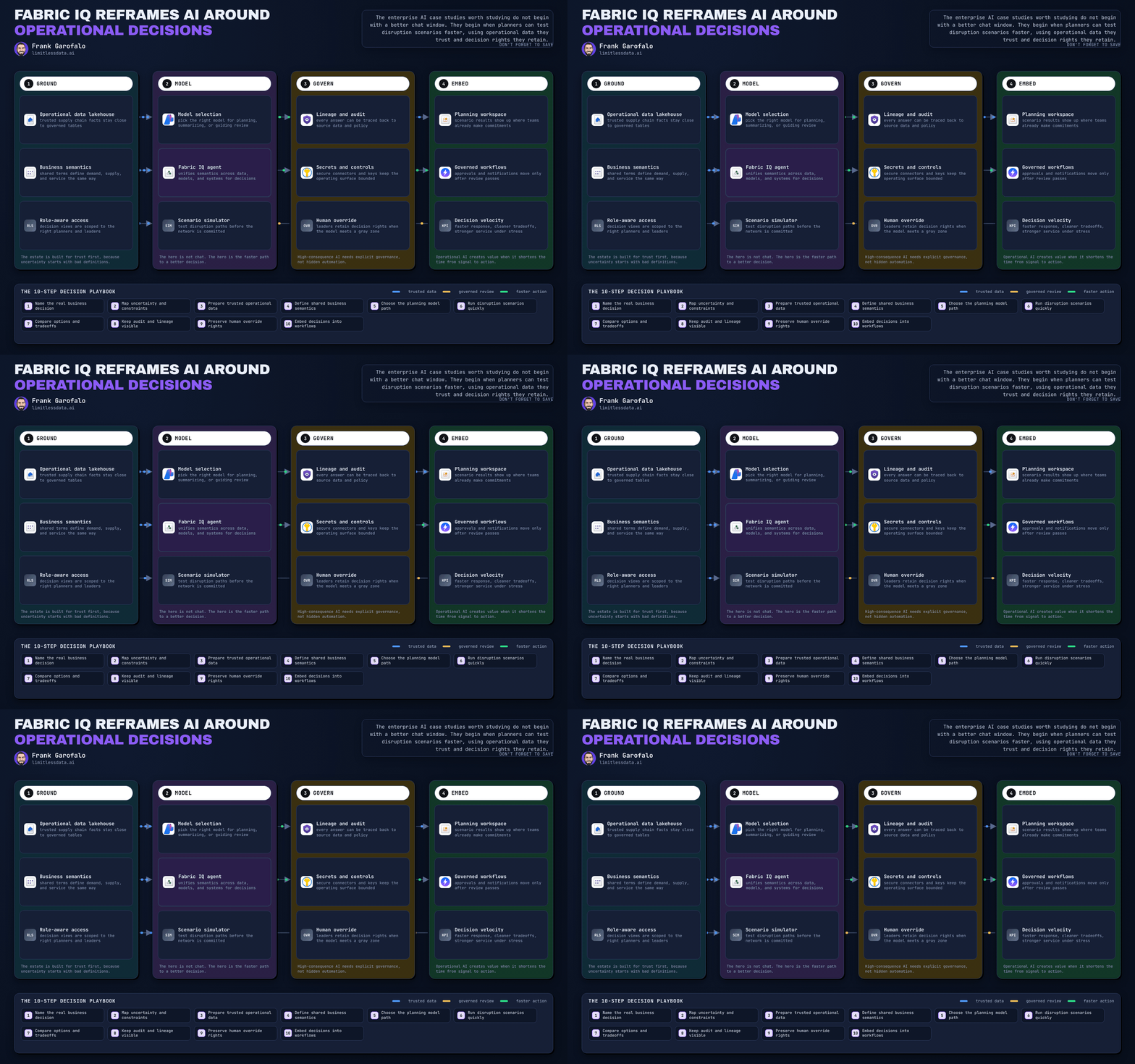
Fabric IQ Could Become Microsoft's AI Control Plane
How Fabric IQ Could Become the Semantic Layer for Enterprise AI


Models are not the first thing breaking enterprise AI. Meaning is.
Most enterprise AI failures do not start with model quality. They start when agents, analytics, and apps interpret the same business concept differently. That is why Fabric IQ is interesting: it appears to be Microsoft’s clearest attempt to make shared business meaning, not just data access, part of the runtime.
A quick qualifier: parts of this story are still emerging and preview-oriented in Microsoft’s documentation. Some capabilities are documented today, while some of the broader platform implications are strategic interpretation. That distinction matters.
My view is simple: if Microsoft can connect OneLake, semantic models, ontology, agents, and governance into one governed answer path, Fabric IQ could become a meaningful semantic layer for enterprise AI. If it remains too Fabric-local, too lightly governed, or too slow for operational use, it risks becoming another metadata layer with limited runtime impact.
Why semantics matter now
The usual enterprise AI conversation focuses on better models, better prompts, or better retrieval. That is only part of the problem.
In large organizations, the first failure is often semantic disagreement.
If one system defines “revenue” as recognized revenue net of returns, another uses gross sales, and a third uses signed contract value, the model does not have an intelligence problem. It has a meaning problem. The same pattern shows up with “customer,” “margin,” “incident,” “active user,” and “policy exception.”
That is why the semantic layer is becoming strategic again, but in a different form than the old BI-only version. What enterprises need now is a runtime semantic layer that analytics tools, AI agents, and operational applications can interpret consistently.
Microsoft’s own framing points in that direction. The Cloud Adoption Framework describes Fabric IQ as providing a semantic intelligence layer over OneLake. Fabric and Foundry documentation also suggest a broader pattern in which agents and Copilot-style experiences are grounded in shared organizational concepts, not just raw data access.
That matters because enterprise AI does not scale on access alone. It scales on consistent interpretation.
Practical implication: if your AI roadmap still treats semantic work as reporting cleanup, you are already behind.
What Fabric IQ is trying to be
Fabric IQ should not be read as just a natural-language feature. The documentation suggests a broader ambition: an intelligence layer over OneLake and the Microsoft data stack that brings together unified data, business intelligence, and operational intelligence.
The key artifact is the ontology item. Microsoft describes it as a digital representation of enterprise vocabulary and a semantic layer that unifies meaning across domains and OneLake sources. That is the strategic move.
An ontology is more than a glossary with better UX. In the best case, it becomes the place where business concepts, relationships, definitions, and runtime interpretation meet.
That is also why the Foundry material matters. Microsoft documents that agents can be grounded in Fabric IQ ontology living in OneLake and reused as a semantic layer for runtime querying. If that pattern holds in practice, the value is not just “ask your data in plain English.” The value is a governed business model that many systems can share.
Place the available visual here as a semantic control plane illustration tied to ontology, policy, lineage, and runtime grounding.
Here is the architecture pattern that seems most important:

The important point is that the semantic layer is in the execution path, not sitting off to the side as documentation.
Practical implication: if your semantic assets cannot influence runtime behavior, they are helpful metadata, not AI infrastructure.
Where Fabric IQ could win
This is where Microsoft may have a real opening.
First, Fabric IQ could be more valuable than a traditional metadata catalog if it affects execution. Catalogs help with discovery, stewardship, and lineage, but many stop at documentation. They tell you what exists. They do not force an agent or app to use the certified concept at query time.
Second, it could be stronger than vector-only approaches for structured enterprise questions. Vector retrieval is useful for finding relevant text. It is much weaker at enforcing canonical metrics, governed joins, and exact business definitions.
A conceptual example:
# Conceptual example: illustrate semantic grounding vs keyword matching.
documents = [
    {"id": 1, "text": "Revenue means recognized sales excluding tax and returns."},
    {"id": 2, "text": "Bookings are signed contract values, not recognized revenue."},
    {"id": 3, "text": "EMEA revenue grew 12 percent in Q4."},
]

semantic_map = {
    "sales": "revenue",
    "recognized sales": "revenue",
    "contract value": "bookings",
}

question = "How much sales did EMEA make in Q4?"
naive_hits = [d for d in documents if "sales" in d["text"].lower() or "emea" in d["text"].lower()]
grounded_terms = [semantic_map.get("sales", "sales"), "emea", "q4"]
semantic_hits = [
    d for d in documents
    if all(term in d["text"].lower() for term in grounded_terms if term in ["revenue", "emea", "q4"])
]

print("Naive retrieval:", [d["id"] for d in naive_hits])
print("Semantic retrieval:", [d["id"] for d in semantic_hits])
print("Grounded concept:", semantic_map["sales"])
The point is not the code. The point is the pattern: document relevance is not the same as enterprise correctness.
Third, Fabric IQ could matter if it extends beyond BI into agents and operational workflows. Microsoft’s documentation places Fabric IQ alongside Power BI, Real-Time Intelligence, and agent experiences inside a broader analytics and AI platform. If that convergence becomes operationally coherent, Microsoft gets something point solutions struggle to offer: one shared semantic contract across BI, AI, and operations.
That is the real upside. SQL, OneLake, semantic models, governance, dashboards, and agents start speaking the same business language.
Practical implication: the platform that governs grounding may matter more than the platform that merely hosts models.
What could block it
This is where the opinion needs discipline. The promise is real, but the success conditions are strict.
1. Cross-platform reach
If Fabric IQ works best only for data already living comfortably inside Fabric and OneLake, its ceiling is lower than the ambition. Enterprises are heterogeneous. SAP, Salesforce, Snowflake, Databricks, on-prem systems, and event platforms are still part of the estate.
A semantic layer that cannot govern meaning across that reality risks becoming Fabric-local rather than enterprise-wide.
2. Governance depth
Once ontology becomes production infrastructure, governance cannot stay informal. Enterprises need stewardship, approval workflows, versioning, policy enforcement, and promotion paths. Semantic configuration needs to be managed with the same seriousness as application delivery.
3. Latency and freshness
A semantic layer is only strategic if it can support operational intelligence, not just reporting. Microsoft’s positioning raises that bar. If ontology resolution and policy checks add too much latency, teams will bypass the layer for urgent workflows.
4. Trust and explainability
Users need to know why an agent answered the way it did. Which governed definition was used? Which semantic model? Which source tables? Which policy filters? Directionally, Microsoft’s grounding story is strong. In practice, enterprise trust depends on visible explanation.
5. Execution maturity
Preview ambition is easy. Production adoption depends on tooling maturity, interoperability, and a clear operating model. Microsoft has many of the pieces. The open question is whether the experience becomes coherent enough for large-scale stewardship.
Practical implication: before betting on any semantic platform, test for reach, governance, latency, and explainability, not just demo quality.
What leaders should do now
The biggest organizational shift is straightforward: semantic context can no longer be a side project owned only by BI teams.
Gold layers, semantic models, and ontology work are becoming AI infrastructure. Microsoft’s training guidance already points teams toward curated data and semantic structure so Copilot, data agents, and enterprise ontologies can produce more accurate outputs. That means work many organizations treated as reporting hygiene is now directly tied to AI quality.
The operating model has to change with that reality.
Finance should own finance concepts. Sales should own sales concepts. Data platform teams should provide tooling, controls, and release processes. Governance teams should define stewardship and approval. This is not a centralized metadata committee problem. It is shared product ownership for business meaning.
A few practical moves matter now:
- Identify the 20 to 30 business concepts that break the most AI and analytics workflows.
- Assign clear domain owners for those concepts.
- Map where definitions diverge across source systems, semantic models, and agent experiences.
- Treat semantic governance as a release process, not a documentation exercise.
- Evaluate whether your current platform can return governed answers with lineage and policy context.
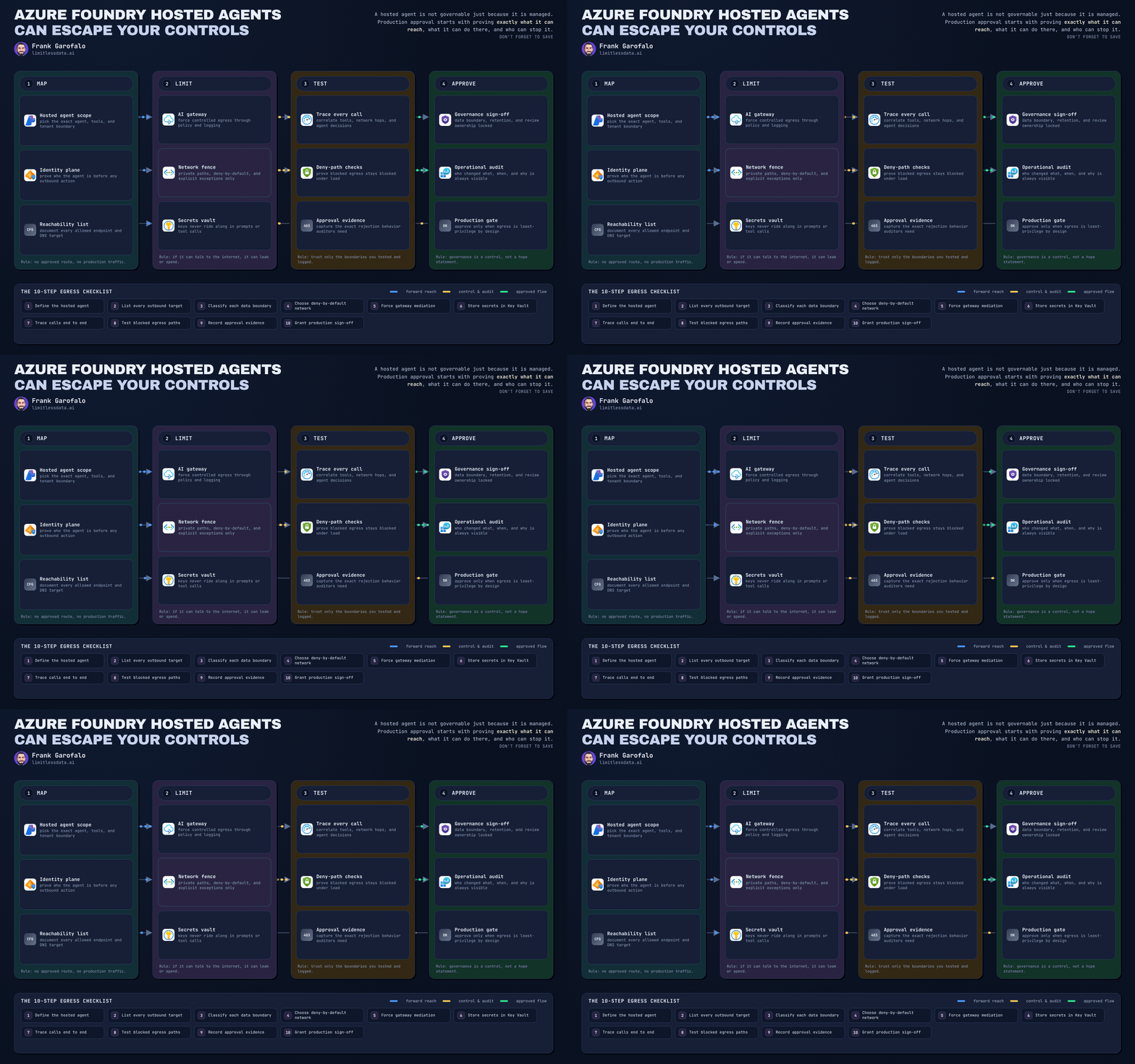
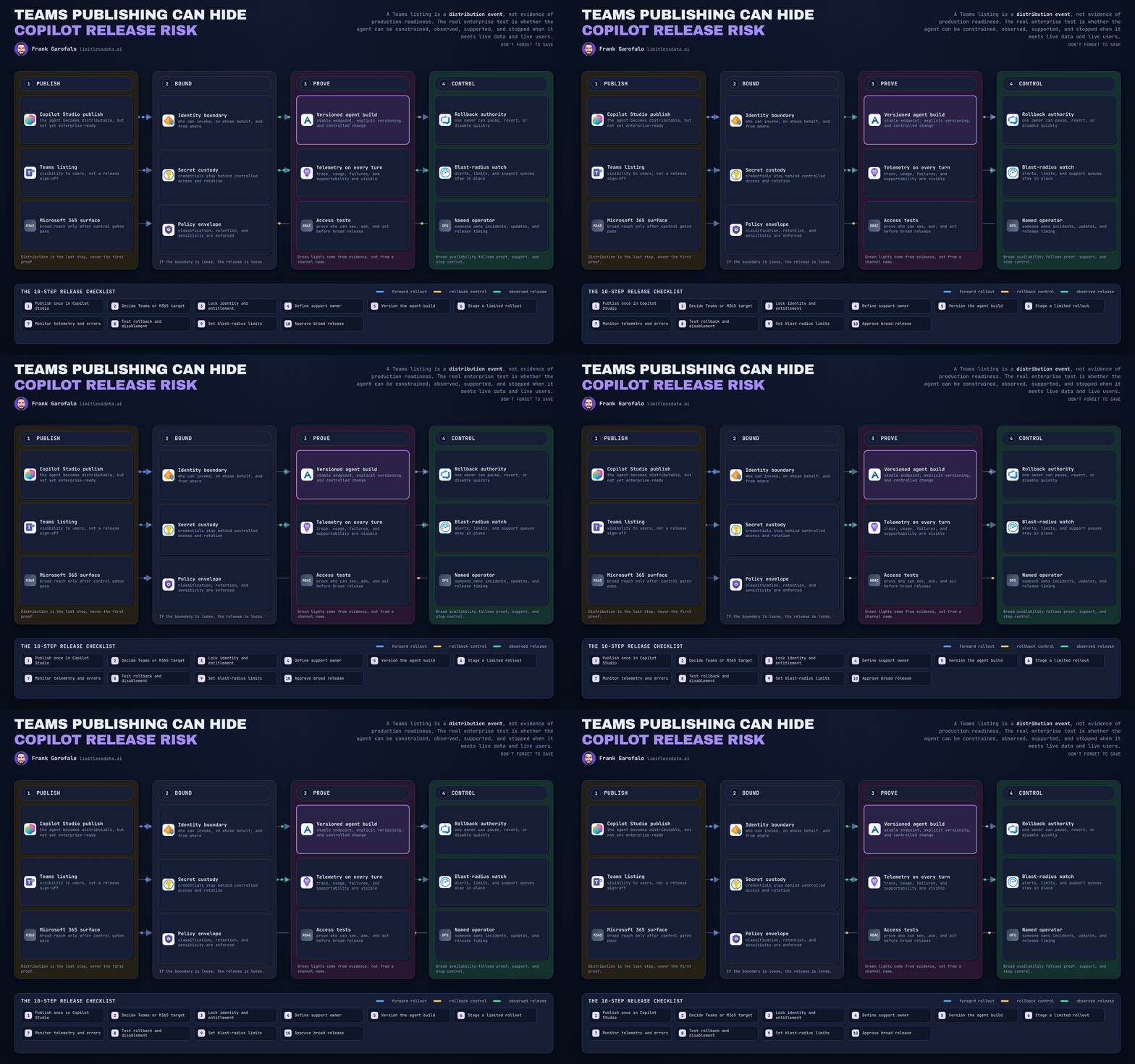
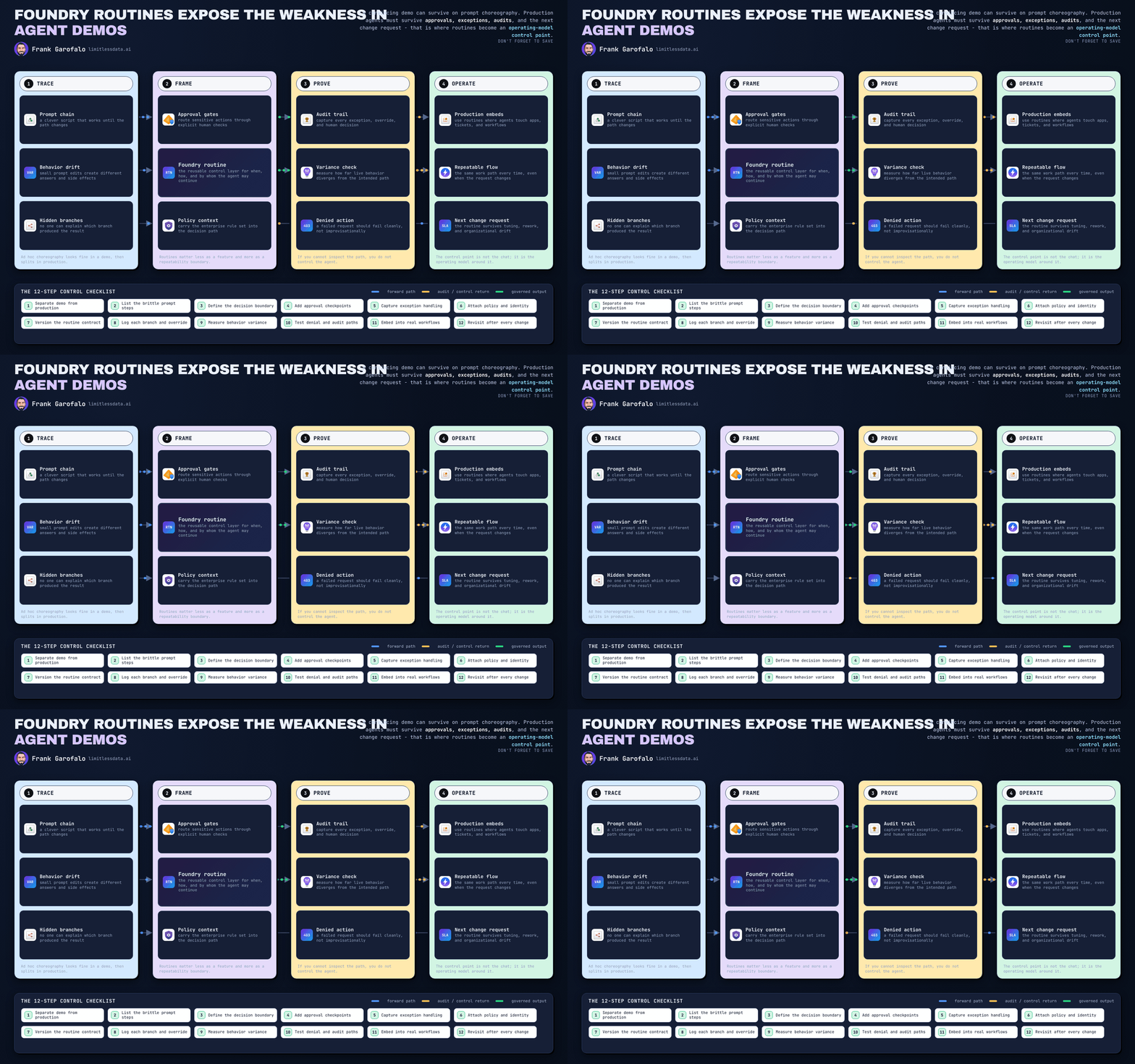
Also, the visuals for this topic should map directly to the argument: an architecture diagram for the governed answer path, a semantic-layer comparison graphic, a governance lifecycle visual, and a summary chart of success conditions.
Practical implication: the fastest way to improve enterprise AI trust is often not another model upgrade. It is reducing ambiguity in the concepts your systems already use.
My forecast
Here is the measured version of my opinion: Fabric IQ could become one of Microsoft’s most important enterprise AI assets because it targets the real bottleneck in enterprise AI adoption, which is shared meaning.
But that outcome is not automatic. The documentation suggests the right direction, not guaranteed dominance. To matter at platform scale, Fabric IQ has to be governed, explainable, operationally fast, and broad enough to work across a heterogeneous enterprise environment.
If Microsoft can make Fabric IQ the governed runtime interpreter of business meaning, it will matter more than another model integration.
Where does this break in your environment: cross-platform data, ontology governance, or runtime latency?
#EnterpriseAI #MicrosoftFabric #DataArchitecture
Sources & References
- What is Fabric IQ? - Microsoft Fabric
- What Is Ontology (Preview)? - Microsoft Fabric
- Prepare the Semantic Layer for AI in Microsoft Fabric - Training
- Prepare AI-Ready Analytics Data in Microsoft Fabric - Training
- Fabric Architecture for a Unified Data Platform - Cloud Adoption Framework
- Connect agents to Microsoft Fabric with Fabric IQ (preview) - Microsoft Foundry
- Create an Ontology Agent with Foundry IQ - Microsoft Fabric
- Analyze and train data in Microsoft Fabric - Microsoft Fabric
- Microsoft IQ documentation
- Track and visualize data in Microsoft Fabric - Microsoft Fabric
Try it yourself
Run this tutorial as a Jupyter notebook: Download runbook.ipynb (25 cells, 22 KB).